Shrouded Deviation

A recent work completed for the upcoming art fair Art Melbourne 08:

Shrouded Deviation

Shrouded Deviation, oil on canvas, 152 x 86 cm, 2008

Posted on | Tagged | Leave a comment

Resurgent Insight

A recent commission:

200804111223

Resurgent Insight, oil on canvas, 102 x 152 cm, 2008

Posted on | Tagged | 1 Comment

Inspiration: Kerry Martin

Whilst in Tasmania last week I visited the Stanley Art Gallery and discovered Kerry Martin‘s work. Her large oil paintings feature an incredible use of light and shadow that draw you deep within the work. Each work evokes the feeling of a dramatic and sublime world reminiscent of Romantic era paintings as well as Japanese printmaking.

Posted on | Tagged , | 3 Comments

Recent paintings

Visit the painting gallery to view my recent works. You can also view the paintings from my recent exhibition in the Tempus gallery.

200804101912.jpg

Posted on | Tagged , | Leave a comment

Recent photographs

I have updated the photography gallery with a number of new photographs. Check out the macro, landscape, and water galleries. Most of the new photographs are from Cradle Mountain National Park in Tasmania, Australia.

200804101904.jpg

Posted on | Tagged | Leave a comment

Virgil Elliott on Oiling Out

Found this on quote on WetCanvas about oiling out a painting:

Oiling out with linseed oil before painting into a dried passage is preferable to using retouch varnish to resaturate the colors, from a standpoint of sound archival practice. Oils dry partly through oxidation, and varnish over the top of an uncured layer of oil paint inhibits its access to oxygen. One important consideration is to wipe or blot off as much of the oiling-out linseed oil as you can get off before painting into it. All that’s needed to accomplish the desired purpose is the absolute thinnest film possible. That will restore the colors to their wet appearance, lubricate the surface so the brush will glide smoothly, and aid the adhesion of the new paint with the previous layer. Linseed oil is chemically compatible with alkyd mediums. However, you might try painting without medium, just to simplify the chemistry of your paintings. Linseed oil can be added (via eyedropper for precise measurement) to each pile of paint that’s too stiff for good control, on the palette, and mixed in well with a palette knife. No turpentine is necessary. You might find this to work as well or better than your alkyd medium.

Secondly, the yellowing of linseed oil reverses itself in normal indoor lighting in a few years, and for that matter can be bleached out in a few days by placing the painting in outdoor light for a few hours a day. The yellowing does not return unless the painting is stored in the dark for extended periods of time, but this re-yellowing is also reversible in the same way. In fact, each cycle of yellowing and re-bleaching results in less yellow than there was before. Whereas the other oils, which make less durable paint films, also discolor slightly, over a longer period of years, and end up looking not much different from linseed oil paint films without the same degree of film strength. This can be seen on one of my test panels, and the phenomenon has been documented with scientific testing done by Henry Levison and others, the papers on which testing are in my files. Thus I see the often-expressed concerns over the yellowing of linseed oil as being largely unwarranted unless one far exceeds the amounts needed or sensible for sound technique.

Posted on | Tagged | 1 Comment

Tempus Exhibition

200803261142.jpg

PREVIEW OPENING NIGHT
Wednesday 26th March 6 – 8 PM

DURATION
March 27 – April 13

HOURS
Thursday – Sunday 11 AM – 5 PM

GALLERY
Port Art Gallery
384 Bay Street
Port Melbourne

Posted on | Tagged | Leave a comment

Mediums for Oil Painters article

I came across this article Mediums for Oil Painters by Kenneth Freed. It gives a run down on the different components of oil painting mediums:

To painters, discussing mediums can be like a political debate. There are pro-Maroger, anti-Maroger, pro-natural resins and anti-natural resins, as well as pro-alkyd and anti-alkyd proponents. The disputes are always about potential cracking, lack of adhesion and yellowing. I have always been the curious type and have experimented with almost every medium that I could get my hands on. However, if you are new to painting, the best approach is to experiment with the paint right out of the tube so that you can understand and fully integrate into your procedure what the paint can do without additives.

Posted on | Tagged | 2 Comments

Dishwashing detergent to clean brushes

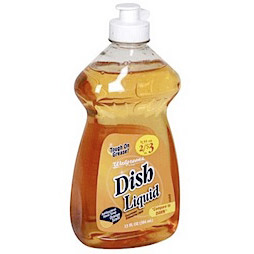
200803260023.jpgI have experimented with numerous soaps to clean oil paint out of brushes, from art shop soaps to a plain old bar of vegetable soap. Art shop soaps are always ridiculously expensive and I always end up using it really quickly – and they aren’t necessarily very good anyway. Bars of soap work OK but it is hard to work the soap into a lather – especially on large brushes.

Recently I experimented with using dish washing detergent. It works fantastically and is so cheap – about $3 for a large bottle! Because the soap is already a liquid you can just dip your brush into it and it works into a lather extremely easily. The oil paint comes out so easily. After all, dishwashing detergent is made to remove fatty oils from plates and cutlery.

I recommend storing the soap in a large container so you can easily dip brushes to coat with detergent.

My method of final clean up at the end of the day is a quick rinse of the brushes in odourless solvent which removes 95% of the paint then a quick clean in the detergent to remove any remaining paint.

Posted on | Tagged | 3 Comments

Glass Painting Palette

200803241936.jpgI have found glass palettes to be the best palette to mix paint on, whether it is oil or acrylics. Every other palette I have used, be it wooden or plastic, always ends up caked with endless layers of paint. It is impossible to get this dried paint off and it becomes hard to mix colours if you like mixing on a clean and smooth palette.

Glass palettes are fantastic because you can scrape off the dried paint and get back to the original clean palette no matter how old the paint is. Use a single edged razor blade to scrape the paint off.

You can use a big plate of glass on a table, or you can use a smaller portable glass palette. One thing to be careful of is using non-safety glass for a portable palette. I slipped once and dropped my palette which cracked and put a hole in a canvas – very dangerous!

Luckily Dick Blick sell the safety-glass Amaco Paragona Glass Artist Palette for $20 USD. I bought the oval shaped palette a while ago and have been extremely happy with it. It is so good not having to stress about cleaning the palette after a nights painting!

Posted on | Tagged | Leave a comment